
Miami Beach Address History Sources
Previous residents leave different traces in each era. Start with the source closest to the date being studied, but keep the present parcel identity in view. The Miami-Dade Property Appraiser supplies the current folio, owner, situs address, mailing address, legal description, sales, and building facts. A folio is the county parcel number. It is a safer bridge than a hotel name or unit style that may have changed. The Clerk's Official Records then connects that parcel to deeds, mortgages, liens, plats, declarations of domicile, and probate-related instruments.
| Source | Years It Covers | Where Held | What It Shows |
|---|---|---|---|
| Clerk Official Records | Most web records, 1974-present; older books retained | Online and Records Library | Owners, instruments, dates, legal descriptions |
| City and criss-cross directories | Exact Miami Beach volumes require catalog confirmation | MDPLS Main Library and State Library | Residents, businesses, occupations, spouses, addresses |
| Florida state censuses | 1885, 1935, 1945 | MDPLS genealogy sources | Households between federal census years |
| Federal census | Decennial schedules through 1950 are open | NARA and library databases | Household members and personal details |
| Permits and code records | Coverage varies by system and record | Miami Beach Civic Access and request | Work site, owner, applicant, work, dates, status |
For a recent sale, lead with the parcel and deed index. For a mid-century household, use directory years around the 1935 or 1945 Florida census. For an early island property, expect records under Dade County, the county's name before 1997, and remember that Miami Beach did not incorporate until 1915. The county's durable land trail can predate both the city and statewide vital registration. Occupancy and ownership are separate facts, so a complete answer usually pairs one source from each side.
Start Miami Beach Trails by Folio
Enter the present street address and suite in the Miami-Dade Property Search. Condominium buildings may open to a list of unit folios, so select the unit carefully. Save the situs address, owner mailing address, legal description, sale date, instrument reference, subdivision, lot, block, and plat book. Situs means the physical site; mailing is where the owner receives tax mail. A mismatch may show an out-of-area owner, but it does not identify a renter.
Miami Beach grew through land filling, hotel construction, condo conversions, and replats. One historic hotel or apartment address can now represent hundreds of folios. Search continuity comes from the legal description and recorded plat, not from adding a modern unit number to an old address. The mapped parcel and city boundary layers help confirm that a Miami Beach postal line is actually in the municipality.
Note: A homestead exemption is an owner-occupancy clue, not proof of every person who lived at the address.
Miami Beach Deeds Before 1974
The Recorder's public web index covers most recorded documents from 1974 forward. That date is an online boundary, not the start of Miami Beach deeds. When the backward chain reaches it, take the last known grantor, book and page, Clerk's File Number, and legal description to the Miami-Dade Records Library. The library at 20 NW 1st Avenue, Suite 5.246, Miami, retains all recorded copies and indexes. Public computers support searches by party, CFN, legal description, and official-record book/page. The main Clerk number is 305-275-1155.
Mail is also available. Give the full name and document type; for a deed or mortgage, add the address or legal description. Copies cost $1 per page, certification costs $2, and a staff search costs $2 per name per year. Narrowing the likely years in directories or census records can keep a broad staff search manageable. A certified copy is the Clerk-authenticated version; the web index is only a discovery pointer.
Florida Vital Statistics publishes the forms used to order event records.
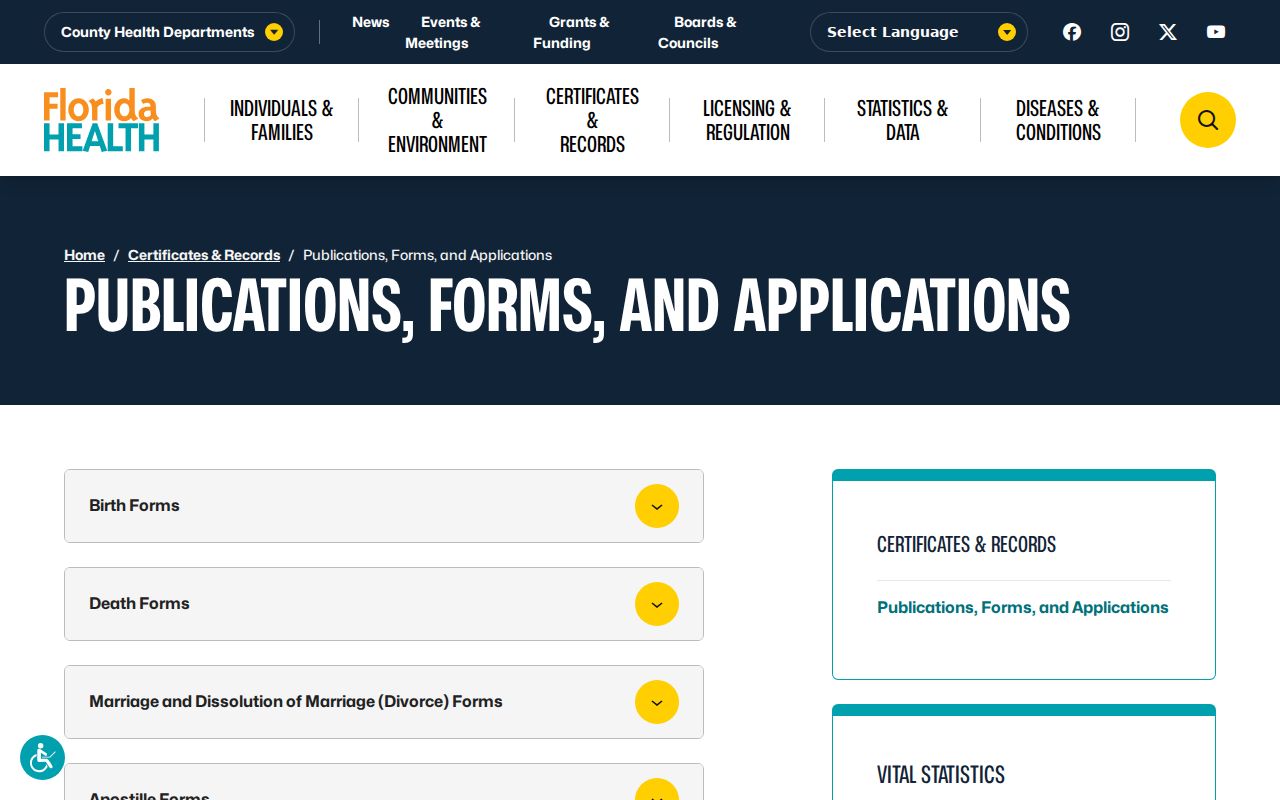
Those forms can confirm a death, marriage, or dissolution after the deed and directory trail produces names and dates, subject to Florida eligibility rules.
Trace Miami-Dade Owners Backward
A chain of title is the sequence of transfers for one parcel. In a deed, the grantor gives the interest and the grantee receives it. Work backward from a confirmed modern deed, not forward from a guessed early owner. Each instrument should agree on the legal description even when the street number, building name, or municipality wording changes.
- Pull the current folio, owner, sale pointer, and full legal description from the Property Appraiser.
- Find that owner's purchase deed in Official Records. Record the grantor, grantee, CFN, book/page, date, and legal description.
- Search the seller as an earlier grantee. Compare subdivision, lot, block, and plat rather than trusting a name match alone.
- Repeat transfer by transfer. Follow probate, trust, judgment, or corporate instruments when title did not pass by a simple sale.
- At the web boundary, continue through the Records Library's older indexes and books with the identifiers already gathered.
- Grantor / grantee
- The person or entity transferring an interest, and the one receiving it.
- Chain of title
- The linked series of recorded transfers for the same property.
- Legal description
- The subdivision, lot, block, plat, or other recorded land identity that survives address changes.
Miami Beach Residents Between Censuses
Ownership still does not answer who occupied the rooms. Search the closest directory to the target year, then compare its alphabetical listing with a street or criss-cross section. A criss-cross directory reverses the usual order by listing a street and house number first. Record the printed spelling, spouse, occupation, employer, phone, residence, and any owner, renter, widow, or roomer marks defined in that volume's key.
The MDPLS Genealogy Collection has more than 27,000 books and 35,000 microforms, including city directories, telephone indexes, Florida's 1885, 1935, and 1945 censuses, and an obituary index. Most deep use is onsite at Main Library, with librarian and e-reference help. Search catalog terms for Miami, Miami Beach, Dade County, and Miami-Dade because geographic labels changed. Exact Miami Beach volume years and publishers need catalog or librarian confirmation.
- Choose a known deed, permit, or census year and inspect the nearest directory volume.
- Move year by year, logging every name, spelling, spouse, occupation, and address change.
- Pair the sequence with the 1935 or 1945 state census and open federal schedules through 1950.
- Use street sections to see adjacent households, but do not infer kinship from proximity alone.
- When a name disappears, test death, relocation, seasonal residence, and simple omission with probate and obituary evidence.
The full shelf method belongs to the Miami Beach city directories collection page. Here the volumes serve one purpose: attaching people to one address over time.
Date Miami Beach Buildings and Names
Miami Beach Civic Access searches permits, plans, inspections, code cases, projects, licenses, requests, and business tax receipts. These records may show an owner, applicant, contractor, work site, description, dates, and status. They can establish when a structure changed use or when a named property was remodeled, but a permit party is not automatically a resident.
The city's cadastral GIS adds parcels, addresses, easements, historic sites, historic districts, neighborhoods, and ZIP boundaries. South Beach's early resort fabric and Art Deco district may call for old permits, directories, photographs, and Sanborn maps. Mid Beach's postwar hotels and North Beach's island subdivisions often require plat continuity. Sanborn coverage and sheet dates must be verified in a library catalog rather than assumed.
Note: Historic photographs and maps date buildings, while deeds and directories identify people; neither source should replace the other.
Close Miami Beach Resident Trails
A deceased former owner may pass title through probate rather than a sale. Search the Miami-Dade Clerk's civil, family, and probate system by decedent name. Public petitions and notices may identify the personal representative, counsel, and interested persons, though inventories and protected details can remain confidential. The MDPLS obituary index and historical newspapers can supply relatives, dates, and former places, but treat an obituary as a lead until an official record confirms it.
Florida death certificates without cause may be ordered by any adult. Cause of death remains confidential for 50 years and has narrower eligibility. Marriage certificates and dissolution abstracts are public, while a full divorce judgment comes from the Clerk. Pre-1970 dissolution searches require the husband's name because of the old statewide index. Births less than 125 years old remain confidential under Chapter 382.
Confirm Miami Beach Past Households
Previous residents should be supported by at least two independent anchors. A directory and census together can confirm an occupant; a deed and parcel record can confirm an owner; probate and an obituary can explain a title transfer after death. Shared names and addresses do not prove a family tie. Miami-Dade names may use compound surnames, reversed paternal and maternal order, accents, hyphens, initials, or Anglicized forms. Search variants, then compare dates, spouse, occupation, legal description, and record numbers.
Some trails properly end. Protected addresses, sealed cases, adoption files, recent births, and cause-of-death data can be unavailable. A narrow Chapter 119 request may retrieve an identifiable existing city record when Civic Access fails, but the custodian is not required to research a biography. Name the address or folio, record type, department, and date span, ask for electronic delivery, and request a cost estimate before extensive work.
Lawful use. Research past residents for house history, genealogy, estate work, or personal curiosity. Florida Statute §784.048 prohibits stalking; never use records to track, threaten, or harass a living person.